Paint & Lacquer Finishing in Custom Fit-outs
We are not a paint retailer. Paint, lacquer and protective coatings are workshop finishing processes applied to the counters, furniture, panels and joinery we manufacture for commercial interiors.
How this fits into our production
Standchi is not a material supplier. Painted and lacquered counter fronts, cabinetry, wall panels, display furniture and custom joinery finished to the colour, sheen and durability level required by the project.
This capability exists to support a complete commercial project. Continue to the service that matches your space: Café Design · Restaurant Design · Store & Shop Design · Showroom Design · Mall Kiosk Design.
Why we use it in commercial fit-outs
Paint, lacquer and varnish are protective and decorative finishing layers applied over wood, MDF, metal and similar surfaces. All three protect the surface from external factors such as moisture, scratches, stains and UV; the difference lies in their composition, application and the resulting surface quality.
- Paint: A pigmented, opaque coating. It fully covers the surface with colour and hides the texture beneath.
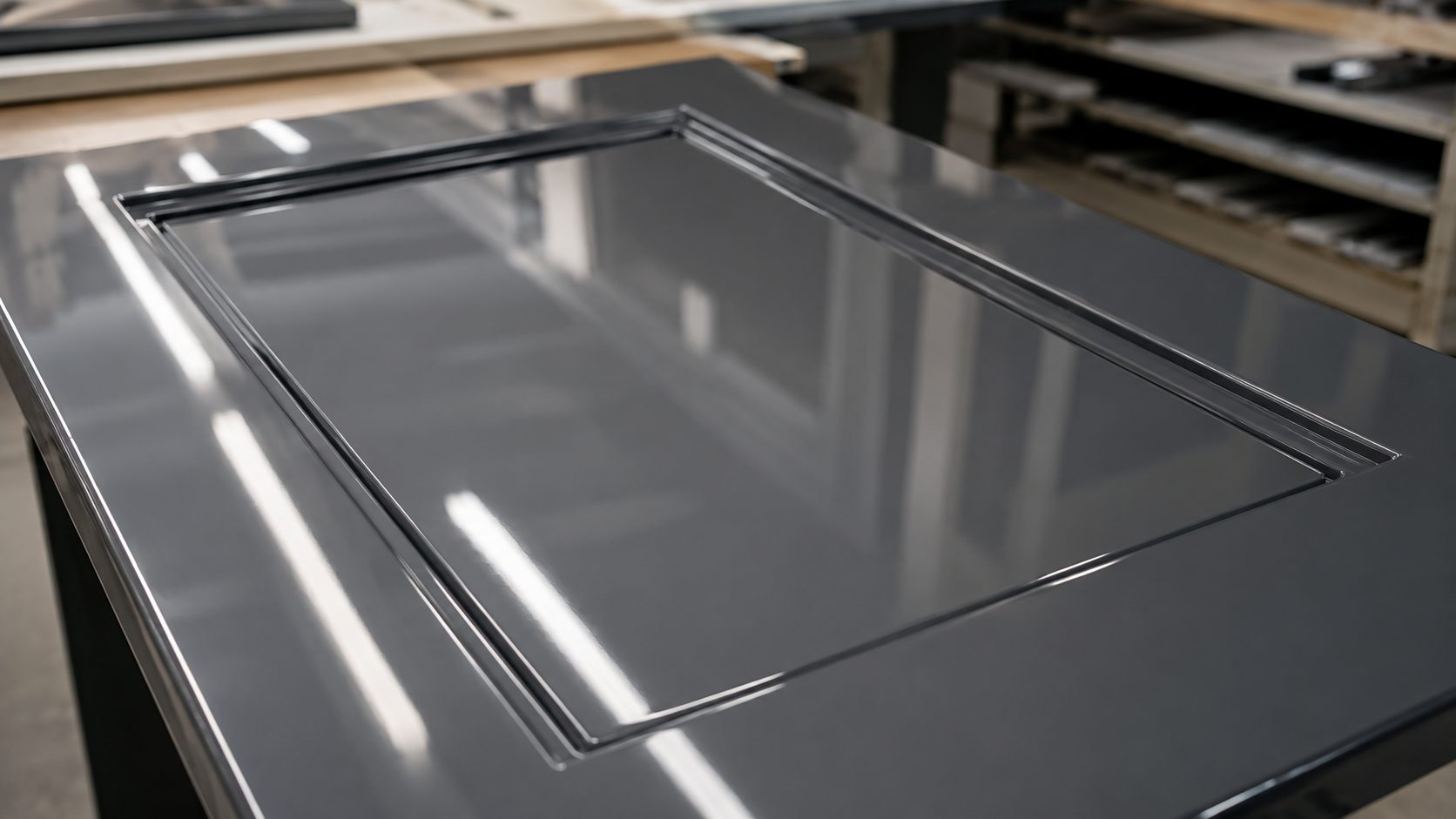
- Lacquer: A premium, usually polyurethane-based finish with high coverage and a smooth, deep surface. It comes in matt, semi-matt and gloss.
- Varnish: A clear or semi-clear layer. It protects the surface while showing the wood's natural grain and colour.
Options we specify by project
By binder type
- Cellulosic: Dries fast, easy to repair; low durability.
- Polyurethane (PU): High scratch/chemical resistance; the standard for lacquer.
- Water-based (acrylic/PU): Low odour and VOC, eco-friendly, fast.
- Acid-cured / UV: Very hard, durable industrial surfaces.
By gloss level
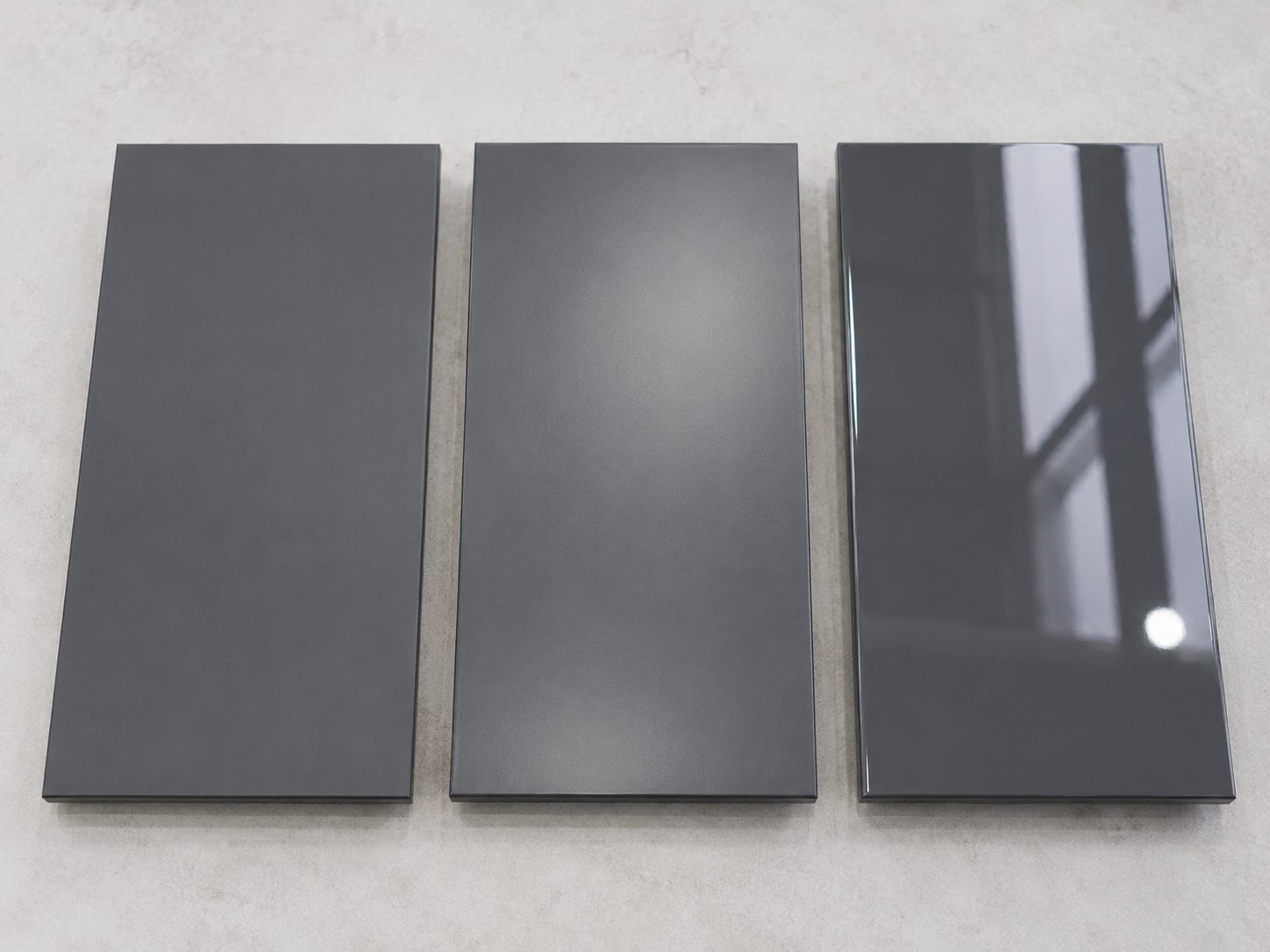
Classified as matt, silk-matt, semi-matt, gloss and piano gloss. As gloss increases the surface looks more vivid, but scratches and fingerprints become more visible.
What matters in fabrication
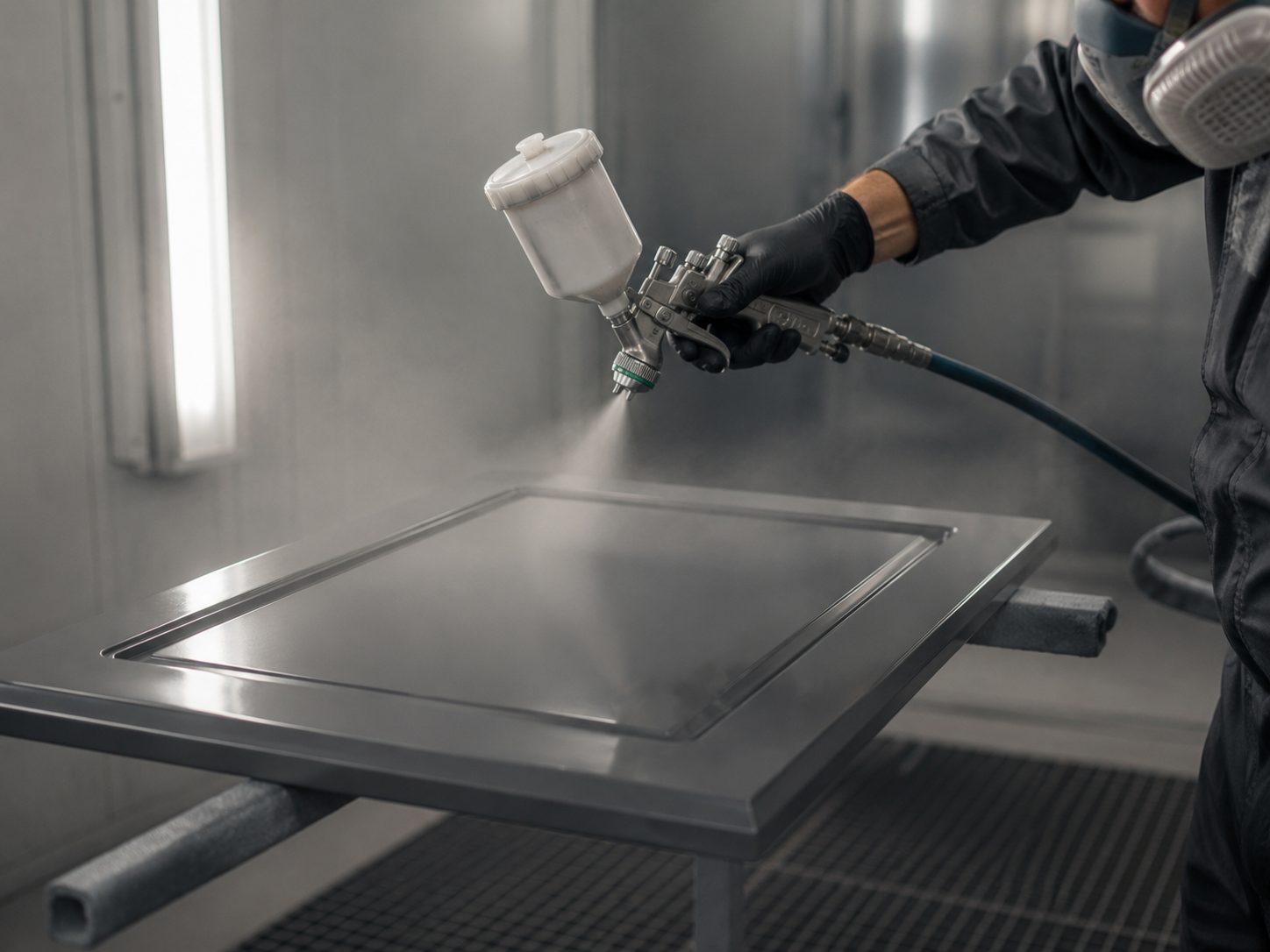
| Application method | Air/airless spraying (best result), brush, roller |
|---|---|
| Layer structure | Primer (filler) + sanding + 2–3 top coats |
| Drying time | Touch-dry in minutes; full cure 1–7 days |
| Surface hardness | High with PU and AC systems; low with cellulosic |
| Durability | Scratch, chemical, moisture and UV resistance (especially PU) |
| Colour / gloss | Unlimited colour (RAL, NCS); matt → high gloss |
Where we use it
In interior decoration, surface finishing appears on almost every surface:
- Bar / service counter fronts and cabinet doors (lacquered MDF)
- Store shelving, racks and cashier-counter carcasses
- Wall panels, decorative wainscoting and ceiling cladding
- Painting of metal legs, profiles and construction
- Varnishing of wooden tables, chairs and decorative work
Why we specify it selectively
Advantages
- Unlimited colour and gloss options
- A smooth, seamless, deep surface (especially lacquer)
- Protects the surface against moisture, scratches and stains
- Unites different materials in a single look
Points to consider
- A quality result needs a dust-free environment and professional application
- Scratches/fingerprints show on high-gloss surfaces
- The multi-layer process can lengthen production time
After installation
Surfaces are wiped with a damp, soft cloth; abrasive sponges and harsh chemicals are avoided. On high-gloss lacquer surfaces a microfibre cloth minimises fingerprints. For deep scratches, local touch-up and polishing are possible.
How we apply it at Standchi
Our 700 m² indoor workshop has a dedicated paint booth / lacquer cabin for surface finishing. From primer to top coat, every layer is applied in a dust-free environment with professional spray equipment. We choose the right system and gloss level for the project's concept and match colours to RAL/NCS references.
Let's choose the right finish for your project together
Let's plan the right use of this material together in your café, restaurant, store or mall kiosk project.
Get a Quote Production Capabilities